Tell us a little about your chimney or fireplace, and we will follow up with a quote for Flue Cleaning White Rock
Heating season has a way of arriving all at once, and so do the calls to chimney companies. Reading up early, as you are doing by searching “flue cleaning”, gives you time to plan instead of scramble. Here are clear, practical answers about flue cleaning for properties around White Rock, each one short enough to read before you pick up the phone and specific enough to be useful once you do.
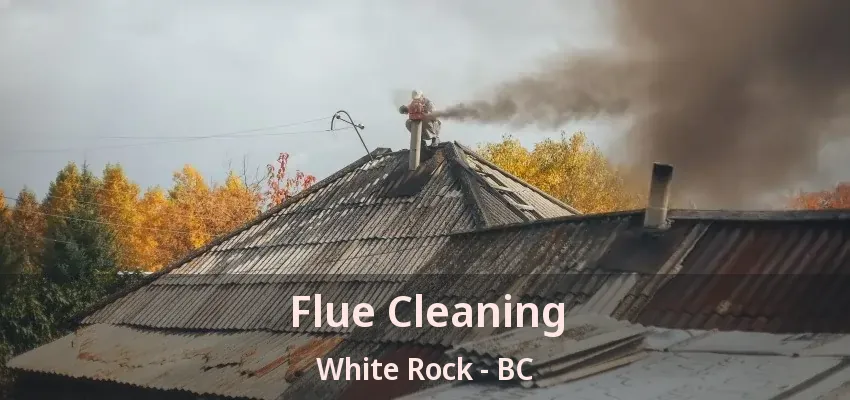
Soot is dry carbon and creosote is a tar-based wood smoke residue, and telling them apart helps us work out what is going on with the appliance. Soot wipes off on a fingertip and falls easily under a brush. When we find heavy soot in a flue serving a gas furnace, boiler or fireplace, we take it as a sign the burner may need attention from a qualified gas technician. Creosote, by contrast, tells us how the wood fires have been run: flaky deposits suggest reasonably hot burning, while sticky or glassy layers point to cool, smoky fires or firewood that was not dry enough.
The flue is the passage inside the chimney that smoke and gases actually travel through, while the chimney is the whole structure around it, including the brick or framing, crown and cap. A single chimney can hold several flues side by side, for example one for a fireplace and another for a furnace or water heater. Each flue has its own liner and needs its own cleaning and inspection. When people search for “flue cleaning”, they are usually talking about clearing that inner passage, which is where soot and creosote collect.
Smoke spills in when the draft is weaker than the push of the fire, and we usually trace it to one of a few causes. In tight, well-sealed houses, exhaust fans and dryers create enough suction that the chimney becomes an air intake instead of an exhaust. Short chimneys, nearby trees or a taller roofline beside the stack can disturb the airflow at the top. Inside the flue, heavy creosote, a nest or fallen debris narrows the path. Sometimes the fireplace opening is simply too large for the flue. Finding which one applies takes a look from both ends, and the fix ranges from a habit change to a repair.
Hardened, glazed creosote is usually removed with rotary tools that scrape the flue wall, with chemical products that soften it over several fires, or with both, because an ordinary brush simply slides over its glassy surface. It forms when cool, smoky fires leave layer after layer of tar that bakes hard. Removal often takes more than one visit, and you may be asked to burn a few fires after a chemical application before the technician returns to finish. Sometimes the glaze is so thick, or the liner so damaged beneath it, that replacing the liner is the more sensible option. Ask for photos before and after.
We tell most owners to plan on a yearly visit and let the findings set the sweeping schedule. If we pull out a heavy load after one season, the chimney should be checked sooner next time; if the flue is lightly coated, stretching the interval is reasonable. Fuel and habits matter more than the calendar. Dry hardwood burned hot leaves far less behind than damp wood or a stove turned down overnight, and inserts and stoves often need attention more often than open fireplaces. Keeping a note of each visit and what came out makes the right rhythm for your chimney easy to see.
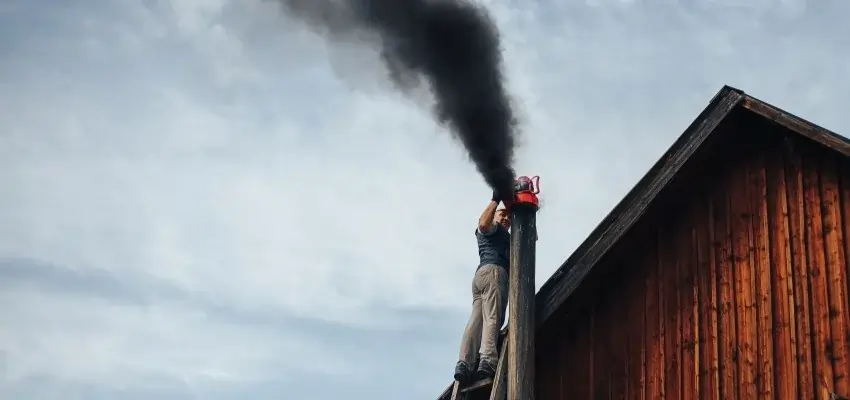
Someone should be home, because almost every chimney visit starts and ends at the hearth. The firebox, damper and smoke chamber are reached from inside, and stoves or inserts may need to be opened up. We also prefer to show the owner what we found while the details are fresh, ideally with photos on a tablet or standing in front of the fireplace itself. A trusted neighbor, relative or property manager can stand in if you are at work. For rentals around White Rock, it helps to tell tenants ahead of time that someone will be working on the roof and at the hearth.
The chimneys we find cleanest belong to owners who burn hot and dry. Creosote forms when smoke cools before it leaves the flue, so anything that keeps smoke hot and thin helps. Well-seasoned wood looks gray, has cracked ends and knocks hollow; heavy, fresh-looking logs hiss and smoke. Top-down fires, with kindling above the larger pieces, tend to burn cleanly from the start. Stove owners who run a brisk fire for a while each morning, rather than smoldering it all night, also see less buildup. A flue that stays lightly coated from one year to the next is the clearest proof the routine is working.
Yes. A flue narrowed by buildup draws less air through the fire, so the fire burns cooler and smokier, which in turn deposits more creosote. With a stove, you may notice it is harder to reach a good operating temperature, the glass blackens quickly and the room takes longer to warm. Open fireplaces may smoke at the front and struggle to stay lit. After flue cleaning, many owners find fires start more easily and burn more steadily, simply because the draft is back to what the appliance was designed for.
We recommend CO alarms on every floor of every home we work in, including one near the bedrooms, because a chimney is a safety system and alarms are its backup. Even a well-swept flue can be blocked overnight by a nest or a fallen tile, and a fireplace can spill fumes when exhaust fans pull against it. We also suggest a smoke alarm in or near the room with the fireplace or stove, placed as its maker directs rather than right above the hearth, and a fire extinguisher within reach. If your alarms are older than anyone can remember, replacing them is a small job with a large payoff.

Asking for a quote does not commit you to anything. We explain what flue cleaning would include for your home, what affects the price and how long it should take, then leave the decision with you. Ask Chimney Sweep White Rock for a quote when you are ready.
Clearer draft, cleaner flue: Chimney Cleaning for White Rock homes
Chimney Sweep visits that leave White Rock living rooms clean
Flue brushing, damper checks, cleanup: Chimney Sweep Services in White Rock
What Fireplace Experts check in your White Rock chimney
Glass cleaned without scratches: Gas Fireplace Cleaning
Yearly Gas Fireplace Maintenance in White Rock, before the cold arrives