
Tell us a little about your chimney or fireplace, and we will follow up with a quote for Dryer Vent Cleaning White Rock
You do not need to become a dryer expert to make a good decision about your vent. For people in White Rock who searched for “dryer vent cleaning”, a few facts settle most of it. Lint that slips past the screen collects at bends, at low spots and behind the outside hood, so long or twisting routes clog faster than short, straight ones. That is why one vent can clog within a year while the one next door stays clear far longer, and why the right plan for dryer vent service depends on your own route rather than a fixed rule.

Rigid metal is the safer pick, and in the field the duct material also tells us a lot about how a vent has been treated. Rigid aluminum or galvanized pipe with taped joints usually comes out with a light, even film of lint. Accordion foil tells a different story: lint packs into every fold, low spots sag and hold moisture, and the hose is often squashed flat against the wall. For the short link behind the dryer, a semi-rigid metal transition is a reasonable compromise because it bends without collapsing. For the run through walls and ceilings, we prefer solid metal pipe wherever the layout allows it.
Not in the usual sense, because a ventless dryer has no duct to the outdoors. Condenser and heat pump models cool the moist air inside the cabinet, collect the water in a container or send it to a drain and reuse the dried air. They still need care, though: the lint screen after every load, plus a second filter or a condenser unit that has to be rinsed or brushed as the manual describes. If you are reading about “dryer vent cleaning” and are not sure which type you own, look behind the machine. A round outlet with a hose attached means it is vented; no outlet at all means it is not.
Get the nest removed and the duct behind it cleared before the next load; we pull nests out of dryer vents more often than most people expect. Birds like the warmth and shelter of a hood whose flap is stuck open or missing, and a low wall vent near a deck or roofline is an easy target. Mice and other small animals sometimes move in too. The nest itself is only part of the job, because the debris usually pushes a plug of lint back up the duct. After clearing it, we confirm the flap closes on its own and recommend a guard style that discourages nesting without trapping lint at the opening.
The clearest sign of a clogged dryer vent is laundry that takes longer to dry than it used to. Other clues tend to show up alongside it:
One sign alone may have another cause, but two or three together usually point to a restricted vent that deserves a proper check.
During dryer vent cleaning, the technician clears lint from the whole path between the dryer and the outside of the house. A typical visit starts with moving the dryer out and disconnecting the hose. The duct is then cleaned with rotating brushes and strong airflow, often from both the inside and the outside opening, and the loosened lint is collected with a vacuum. The hose and the outside hood get the same attention. Finally, the dryer is reconnected, pushed back carefully and run for a few minutes to confirm good airflow. You should see what came out and hear what was found.
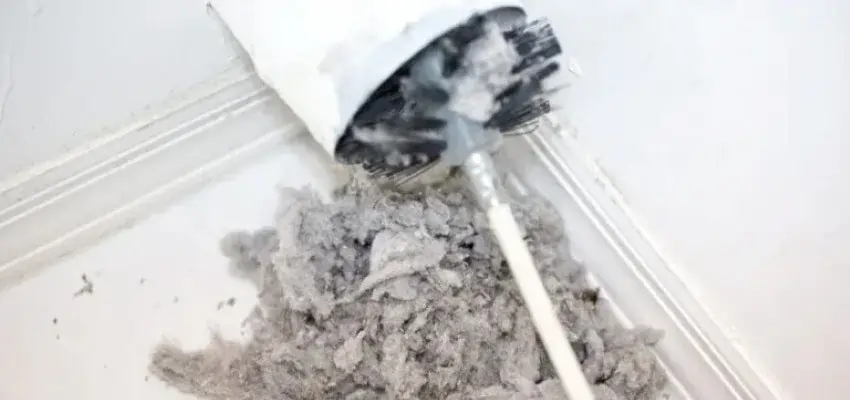
Yes, though usually less often than a long one. A vent that goes straight through the wall behind the dryer carries lint out efficiently, so the duct itself may stay fairly clear. The weak points simply move: the connector behind the machine gets crushed when the dryer is pushed back, and the outside hood collects fluff where the air slows against the flap. Short vents near ground level are also easy targets for nesting birds. Glancing at the flap every few months and booking dryer vent service when drying times creep up keeps a short run working well without paying for visits it does not need.
The visits that go smoothest start with a clear workspace. We need a few feet of room in front of the dryer to slide it out and a spot to set our vacuum and rods. A dryer that has just finished a cycle is hot, so running the last load an hour or two earlier helps. Outside, we need to reach the hood without moving barbecues or stacked firewood, and for roof vents we need firm, level ground to set up a ladder. If there is a pet door, an alarm or a gate code, telling us ahead of time keeps the day on track.
You can handle part of the job yourself, but most homes benefit from a professional cleaning of the full vent. Safe DIY tasks include emptying and washing the lint screen, vacuuming the screen slot, wiping lint off the outside hood and checking that the flap opens. Brush kits from a hardware store can work on a short, straight vent you can reach from both ends. Long runs, roof exits, gas dryers and vents hidden in ceilings are better left to a technician with longer rods and stronger vacuums. Leaf blowers tend to scatter lint and push clumps deeper rather than remove them.
Comparing dryer vent quotes is easiest when each one covers the same work. Check whether the price includes the whole run from the dryer to the outside, the transition behind the machine and the exterior hood, and whether it changes for roof exits, long runs or heavy buildup. Look at how repairs and parts would be priced if they turn out to be needed. A quote that seems much lower than the rest may leave out part of the vent or add charges on site. The clearest quotes are written, specific to your home and explained without pressure to decide on the spot.
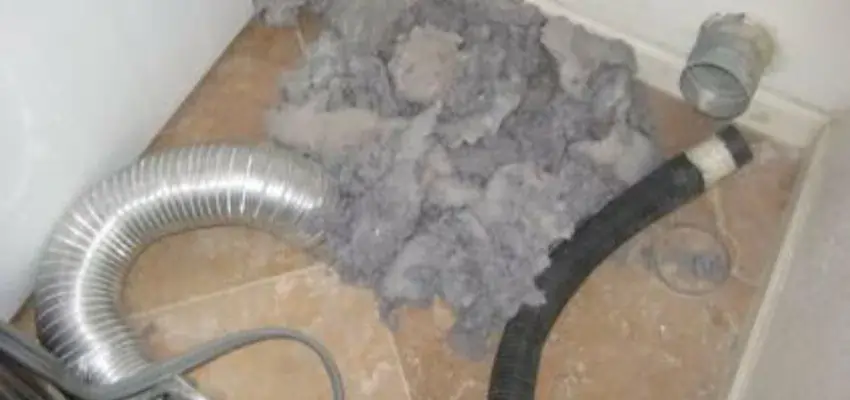
Sometimes the right call is a small fix, sometimes a bigger job and sometimes nothing at all. We tell you which one applies to your dryer vent and why. Ask Chimney Sweep White Rock for advice and decide in your own time.
Clearer draft, cleaner flue: Chimney Cleaning for White Rock homes
Chimney Sweep visits that leave White Rock living rooms clean
Flue brushing, damper checks, cleanup: Chimney Sweep Services in White Rock
What Fireplace Experts check in your White Rock chimney
Glass cleaned without scratches: Gas Fireplace Cleaning
Yearly Gas Fireplace Maintenance in White Rock, before the cold arrives