Tell us a little about your chimney or fireplace, and we will follow up with a quote for Chimney Service White Rock
The first cool evening of the season is when many people remember the chimney and start wondering what state it is in. If you searched for “chimney service”, you probably want clear facts before anyone climbs onto the roof. This page answers the questions owners around White Rock ask most often about chimney care, in plain language and without scare tactics. Read the parts that match your situation, skip the rest and come away knowing what is normal, what deserves a closer look and what can safely wait.
Soot is dry carbon and creosote is a tar-based wood smoke residue, and telling them apart helps us work out what is going on with the appliance. Soot wipes off on a fingertip and falls easily under a brush. When we find heavy soot in a flue serving a gas furnace, boiler or fireplace, we take it as a sign the burner may need attention from a qualified gas technician. Creosote, by contrast, tells us how the wood fires have been run: flaky deposits suggest reasonably hot burning, while sticky or glassy layers point to cool, smoky fires or firewood that was not dry enough.
A chimney needs sweeping because every fire leaves deposits inside the flue, and if they are never removed they turn into a fire hazard and an obstruction. The main culprit is creosote, a tarry residue from wood smoke that burns hot and fast once it ignites. Buildup also narrows the passage, so smoke drifts back into the room and fires get harder to start. A swept flue drafts better, smells less and gives whoever cleans it a clear view of the liner, damper and cap, which is often how cracks, rust and loose parts are caught while they are still small.
Signs of a chimney fire include a loud roaring or popping sound, dense smoke, a strong hot smell and sparks or flames from the top of the chimney, but many chimney fires burn quietly and are only discovered later. Afterward you might notice puffy, honeycomb-like flakes of creosote on the roof or ground, a warped damper or cap, cracked flue tiles or discolored metal. If you think a fire is happening, get everyone outside and call the fire department. If you suspect one happened in the past, stop using the fireplace or stove until the chimney has been inspected.
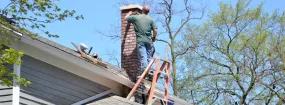
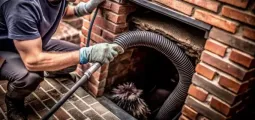
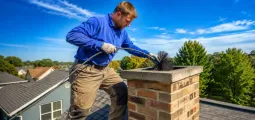
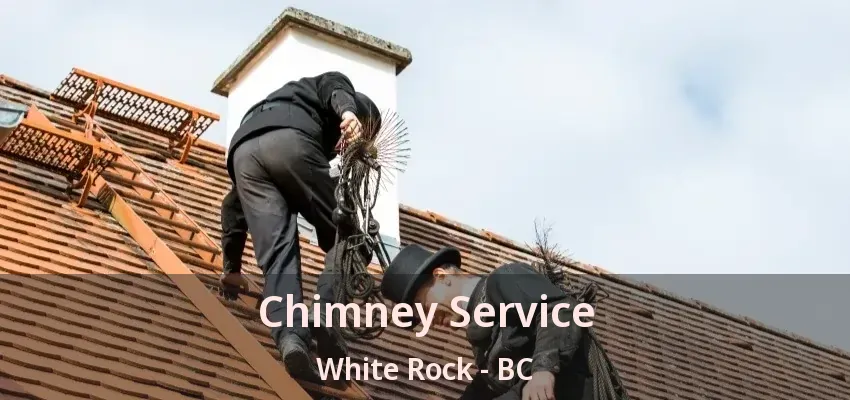
During a chimney sweep, the technician scrubs the inside of the flue from top to bottom and removes the loosened buildup without spreading it through the room. A typical visit starts with drop cloths around the hearth and a powerful vacuum set up at the fireplace or stove opening. Brushes sized to the flue are run through on flexible rods, from below, from the roof or both. The smoke chamber, damper and firebox are cleaned as well. Most sweeps finish by checking the cap and the visible parts of the chimney and telling you what they saw, including anything that needs attention later.
A common guideline is to have a chimney inspected once a year and swept whenever that inspection finds meaningful buildup, which for a fireplace or stove used regularly usually means about once a year. Heavy users, such as households heating mainly with wood, may need sweeping more than once per season. A fireplace lit only a few times each winter may go longer between sweeps, yet it still benefits from the yearly look, because nests, water damage and cracks have nothing to do with how often you burn. Many sweeps regard about an eighth of an inch of buildup as the point where cleaning is due.

A standard chimney sweep usually takes about an hour to an hour and a half for a single flue. Expect more time if there are several flues, if a stove or insert has to be disconnected, if the roof is steep or high, or if the buildup is heavy or glazed. A camera inspection or a written report adds a little more. Plan to be available for the whole visit and for a short conversation at the end, when the technician explains what was found. If your day is tight, describe your setup when booking so the company can give you a realistic window.
Often they can, and it usually saves time and a second trip to the roof. A sweep and inspection pair naturally with a cap installation, a damper repair or sealing a small crack in the crown, provided the parts are on hand. Booking these together also means the technician sees the whole system at once. Some tasks, such as major masonry or liner work, may still need a separate day because of materials or curing time. Let the company know everything on your list when arranging chimney care, and ask which pieces can be grouped.
A simple log makes each visit more useful. Note roughly how many fires you have had, what wood you burned and whether it was fully dry. Jot down any smells, smoke in the room, sounds in the flue or water stains near the chimney, along with the date. Check the cap from the ground after big storms and note anything that looks bent or missing. Keep the reports from previous visits together. Sharing that history during your next “chimney service” appointment helps the technician spot trends instead of judging the chimney from a single day.
You can reduce creosote buildup mostly by burning dry wood in hot, lively fires. Use firewood that has been split and stacked under cover for several months, longer for dense hardwoods, and consider an inexpensive moisture meter to take the guesswork out. Give the fire enough air instead of letting it smolder, and avoid packing a stove full and shutting the air down overnight. Never burn trash, cardboard, painted or pressure-treated wood, or a holiday tree. Smaller, hotter loads leave less behind than big, smoky ones. These habits will not replace sweeping, but they slow the buildup noticeably.

Kids, pets and work schedules all matter when someone visits your home. Let us know what to work around and we will plan the appointment to match. Choose a time for chimney care anywhere in White Rock.
Clearer draft, cleaner flue: Chimney Cleaning for White Rock homes
Chimney Sweep visits that leave White Rock living rooms clean
Flue brushing, damper checks, cleanup: Chimney Sweep Services in White Rock
What Fireplace Experts check in your White Rock chimney
Glass cleaned without scratches: Gas Fireplace Cleaning
Yearly Gas Fireplace Maintenance in White Rock, before the cold arrives