Flame Appearance

Sooty or Sputtering Gas Flames? Burner Settings Differ by Make

Fans, Doors and Add-Ons

Blowers, Glass Doors, Screens and Other Hearth Add-Ons

Aftermarket extras can make a fireplace more efficient, or tidier, or simply nicer to sit beside, yet each one changes how the unit behaves. These answers look at the common add-ons through a chimney and safety lens. Before buying something for your hearth in White Rock, a quick question to Chimney Sweep White Rock might save a return trip to the store.
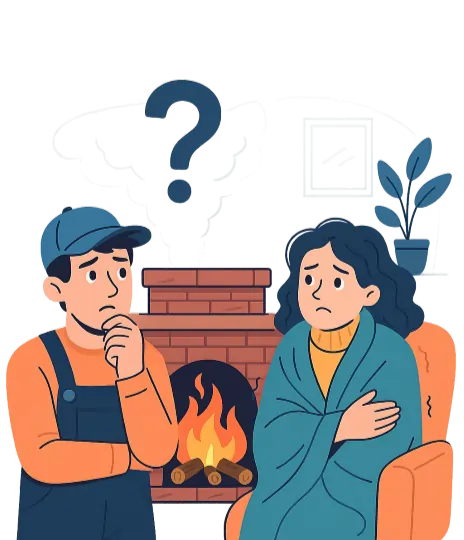
A damper works like a door for the flue: open while a fire burns, shut afterward so heated air does not escape up the chimney. In most masonry fireplaces it sits at the throat, just above the firebox, and moves with a handle or chain. Some systems seal at the top instead, near the cap. Open it all the way before you strike a match and keep it open until the ashes are cold.

It needs the same regular cleaning as any other, just with the right tools. Insulated and stainless liners resist wear, but creosote still collects inside. Tell the technician what type you have and who installed it so the right brush goes in. Keep the paperwork that came with the liner, since it often lists care instructions.

They can help, mostly when the fireplace is not in use. Closed doors reduce the amount of warm room air that leaks up the chimney, and they keep embers and sparks in. While the fire burns, an open masonry fireplace still sends much of its heat up the flue, and doors do not change that very much. For real heating gains, a tested insert is a stronger step.

Moisture on a stainless liner usually points to a flue that stays cold. Insulating the liner, making sure its diameter suits the appliance and burning dry wood hot enough to warm the flue all cut down the condensation. A cap keeps rain from adding to it. If the liner shows heavy rust spots or drips, have it checked, since the problem may be the sizing or a damaged part.

It can. Appliances share the air in the house, and when a new one is installed or a window upgrade tightens the building, the fireplace may lose air it used to get. A fireplace that was fine for years can start to smoke afterward. Tell your technician about recent changes, since they will check the air supply along with the chimney.

A sweep is cleaning: brushes and a vacuum remove soot and creosote from the flue. An inspection is looking: the technician examines the liner, masonry, damper, cap and connections for damage or poor installation, sometimes with a camera. Cleaning leaves you with a cleaner flue, while an inspection leaves you with information. Many visits blend a light look into the sweep, but a deeper inspection is its own task with its own purpose.
Frequently Asked Questions
GET IN TOUCH

We’d Love to Hear From You

PHONE

(778) 770-1602

EMAIL

Tap to write to us

Write to Our Team

An address lets us plan travel time and pick a slot that works.